
Performance vs. Robustness: What if we did things differently?
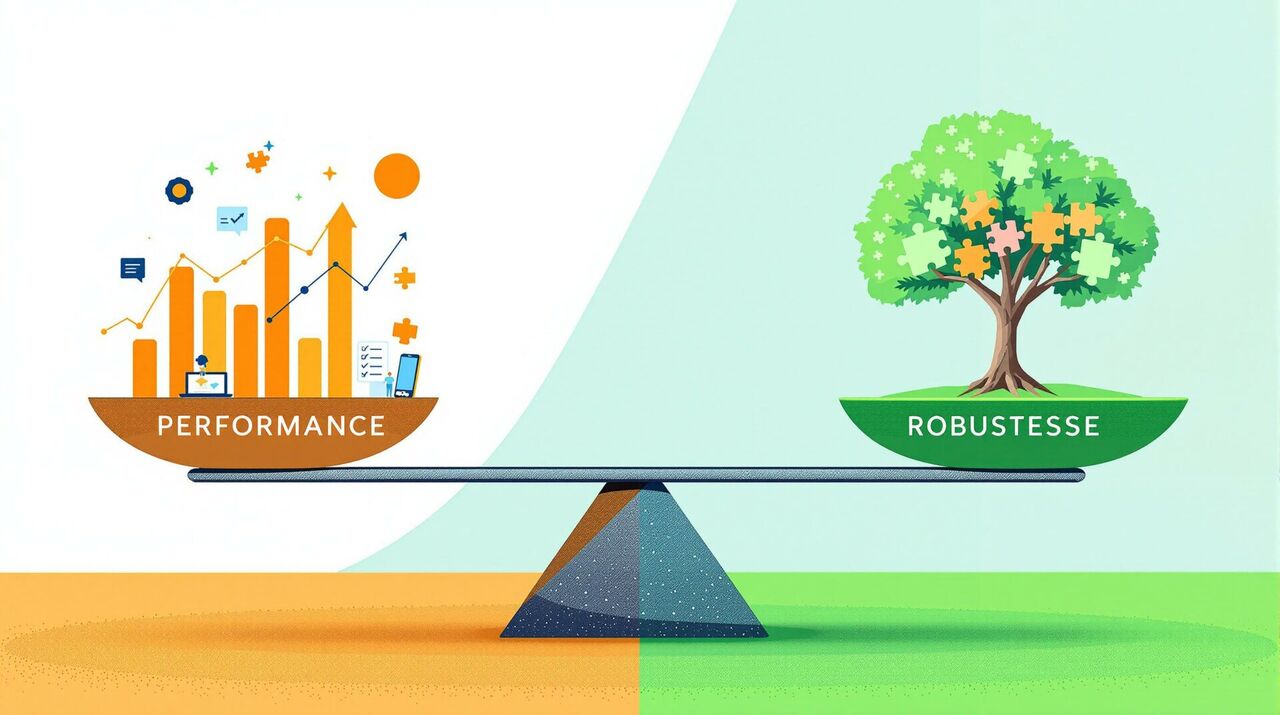
The modern obsession with productivity and efficiency is deeply ingrained in our social fabric, often framing success as a linear path of continuous optimization. However, as interdisciplinary biologist Olivier Hamant suggests, this “cult of performance” may actually be leading us toward fragility rather than strength. By examining biological processes, we can find a compelling counter-model to the rigid pursuit of perfection.
The Myth of Biological Perfection
While we often think of nature as a series of perfectly tuned machines, the life sciences reveal a different reality. Natural systems are built on a foundation of “suboptimality.” This means that errors, delays, and redundancies are not flaws, but essential features that allow for adaptation. In biology, a system that is 100% efficient is often incapable of surviving a sudden environmental shift because it has no “slack” or room to maneuver.
Performance vs. Resilience
The distinction between being efficient and being resilient is crucial for the future of organizational management.
-
Performance: Focuses on maximizing output and minimizing waste in a stable environment. It often relies on individualism and hyper-specialization.
-
Durability (Robustness): Prioritizes survival and the ability to rebound from shocks. This requires cooperation, redundancy (having multiple ways to solve the same problem), and even a degree of “randomness.”
When we apply these biological lessons to the corporate world, we see a paradox. Focusing solely on individualism to survive may work in the short term, but it often destroys the healthy environment—both ecological and social—needed for long-term existence.
Toward a Biologically Inspired Organization
Hamant’s “Third Way of Life” proposes a shift away from total control. Instead of viewing inconsistencies as negative, organizations should learn to value the “slowness” that allows for deeper reflection and the “redundancy” that provides a safety net during crises.
By drawing inspiration from living systems, we can move toward a socio-economic model that is reconciled with nature. This involves a shared perspective where stakeholders prioritize the health of the entire ecosystem over the narrow optimization of a single part.
And what would you choose? Performance or durability?
The answer likely dictates whether we continue to race toward a breaking point or pivot toward a viable, lasting future.