
Educational Games for Children: Learning Through Play
Between the ages of 6 and 10, children are in a crucial phase of their cognitive, emotional, and social development. Educational games are valuable tools to support their learning while stimulating their creativity and curiosity. Here’s an overview of the types of games that can enrich this age group and the benefits they offer for early childhood development.
1. Construction Toys
Construction toys, such as Lego or wooden blocks, are excellent for developing hand-eye coordination, problem-solving skills, and STEM skills (science, technology, engineering, and math). By manipulating pieces to create structures, children learn basic concepts in geometry and physics while stimulating their imagination.
2. Board Games
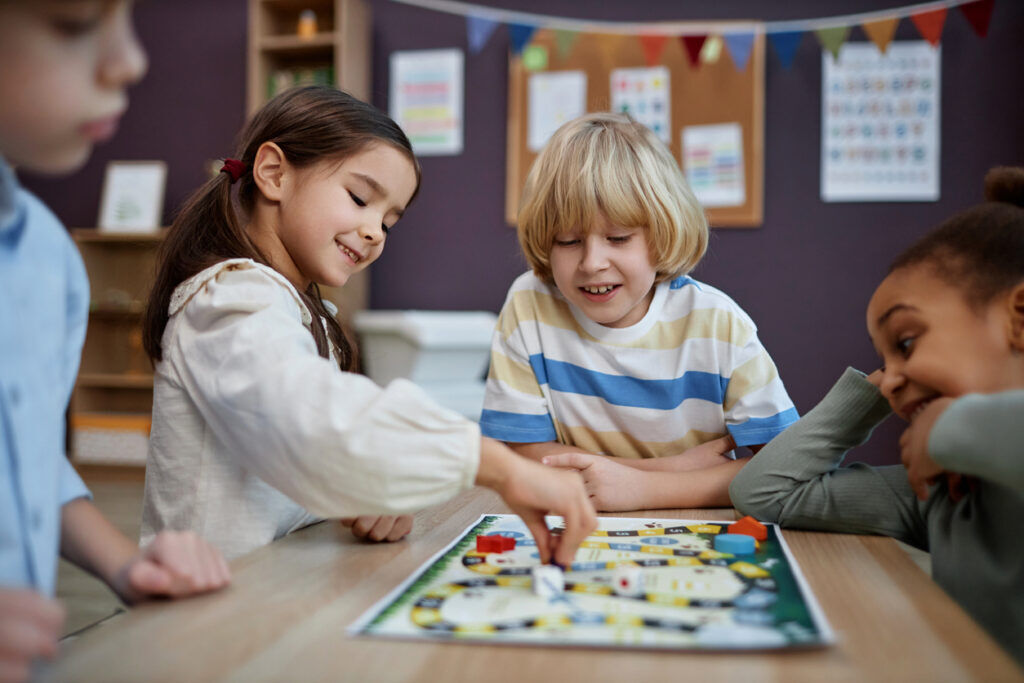
Board games such as Monopoly Junior, Snakes and Ladders, or Ticket to Ride introduce children to rules, strategic thinking, and resource management. They also promote the development of social skills, such as taking turns and cooperating with other players, which are essential for social-emotional learning.
3. Memory Games
Memory games, such as Memo or variations with picture cards, help improve concentration, visual memory, and pattern recognition. These games also foster patience and perseverance, as children must remember the card locations to win, boosting their cognitive growth.
4. Role-Playing Games
Role-playing games like doctor, shopkeeper, or superhero games allow children to explore social roles, improve their language skills, and deepen their understanding of human interaction. These games encourage creativity and help develop social intelligence by imitating real-life situations.
5. Logic and Puzzle Games
Puzzles and logic games, such as brain teasers or mazes, help develop problem-solving and critical thinking skills. They also encourage concentration and patience, while providing a sense of accomplishment as children solve cognitive challenges.
6. Physical Activity Games
Games that combine physical activity and learning, such as obstacle courses or educational ball games, are essential for motor development and coordination. They also promote discipline and stress management, while allowing children to expend their energy constructively through active learning.